3 November 2026 · Tent Ideas · WT tent
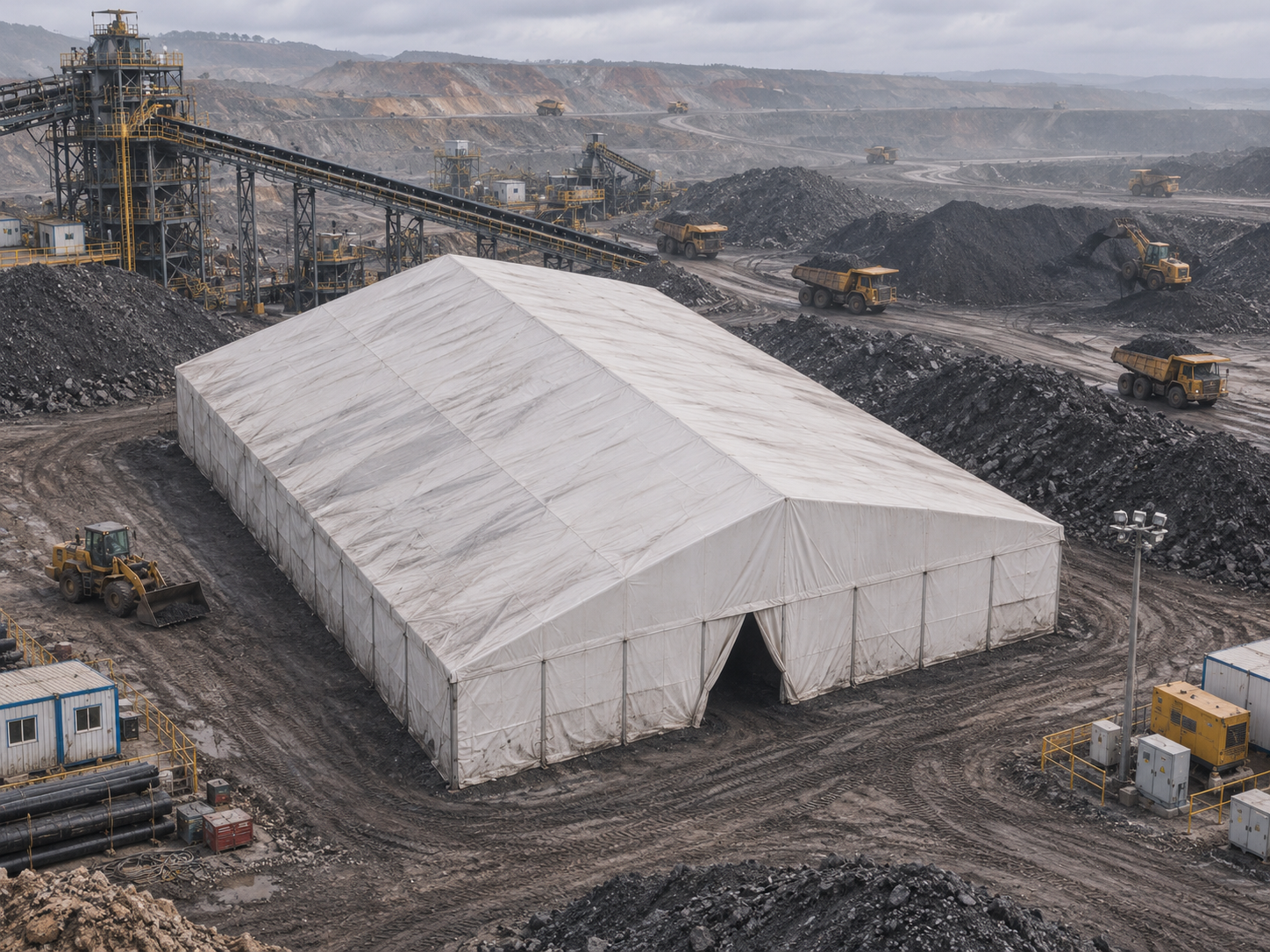
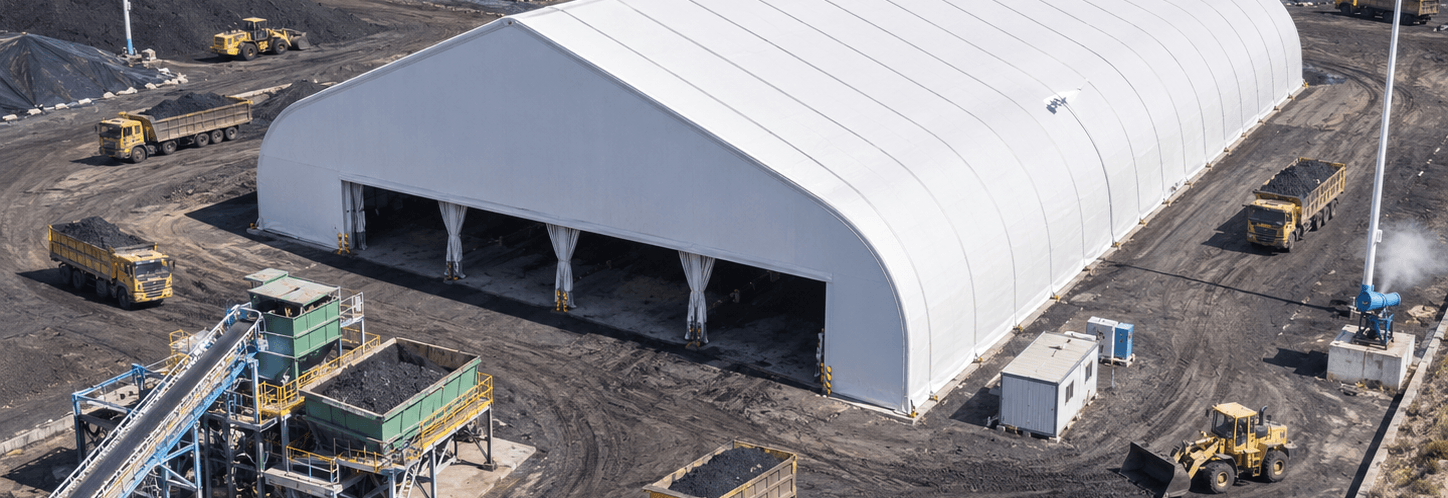
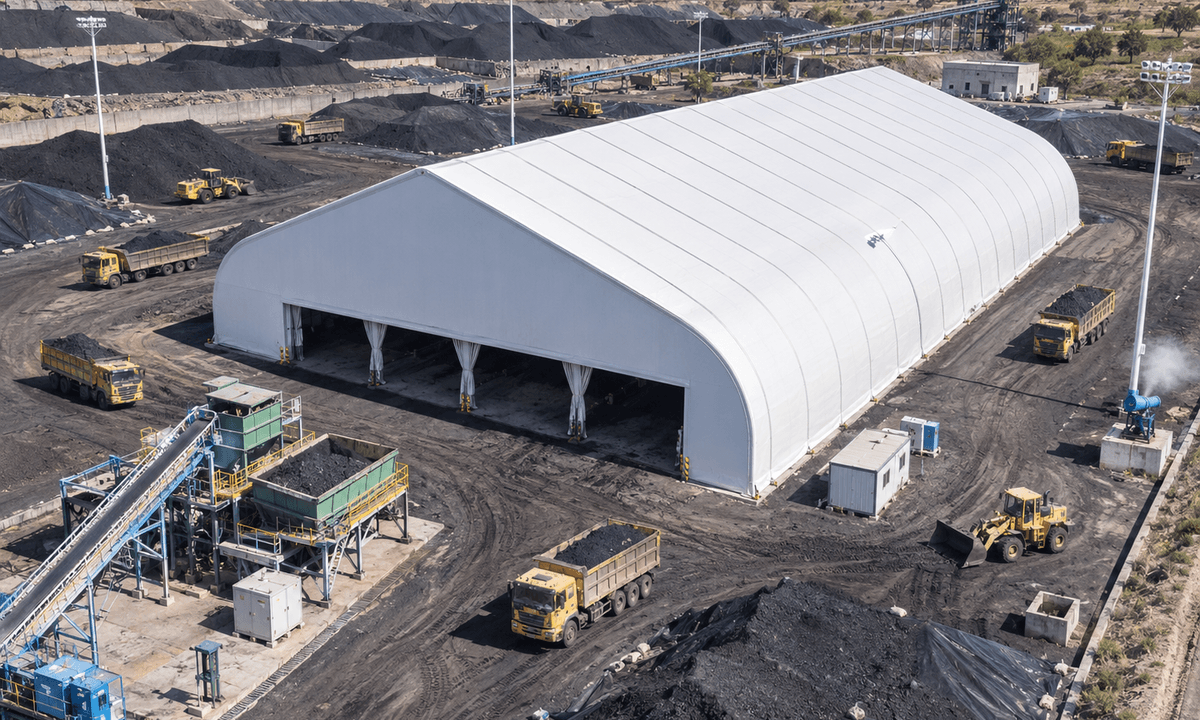
While airtightness is a fundamental feature of modular coal-storage tents, a simple enclosed space can easily lead to issues such as excessive airborne dust, coal-dust accumulation, and the buildup of gases like methane and carbon monoxide. Implementing a system that combines dust-suppression misting with explosion-proof ventilation—tailored to the specific operational conditions of a mining site—is not only a mandatory requirement for environmental compliance but also a critical measure for safety and environmental management, as well as for mitigating the risk of dust explosions.
High-Pressure Micro-Mist Dust Suppression System: Targeted Dust Control and Reduced Coal Loss
Coal storage tents are typically large-span, column-free enclosed spaces where the primary sources of dust generation include loader operations, coal discharge, and vehicle loading/unloading. A high-pressure micro-mist dust suppression system is the preferred solution; unlike traditional water-spraying methods, this system produces fine droplets that rapidly capture airborne coal dust without excessively increasing the moisture content of the coal—thereby minimizing the accumulation of coal sludge and preventing material degradation or loss.The system layout prioritizes key dust-generating points, with fixed nozzles installed at discharge chutes, stockpile slopes, and vehicle loading/unloading lanes. In areas with high dust output, rail-mounted mobile spraying units can be added. The system is integrated with an online dust monitor to enable automatic operation: spraying is triggered when dust levels exceed a set threshold and ceases when concentrations return to an acceptable range, ensuring efficient use of water and electricity. Multi-stage filters are installed in the piping to prevent nozzle clogging, and for mining operations in northern regions, the system can be equipped with heat-tracing (anti-freezing) components to ensure stable performance during the winter months.
Explosion-proof ventilation system: Systematic air exchange to mitigate combustion and explosion risks
The primary safety risks in enclosed coal storage spaces stem from explosive coal dust and the gradual release of combustible gases from the raw coal; therefore, an explosion-proof ventilation system is essential. All fans, control panels, and wiring components must be of an explosion-proof design suitable for dusty environments, with cables and switches strictly adhering to electrical safety standards for coal storage facilities.Airflow is typically managed using a "top-exhaust, bottom-supply" configuration: explosion-proof exhaust fans are installed at the top of the enclosure to promptly remove rising coal dust, methane, and carbon monoxide, while fresh air inlets are positioned at the lower level. This creates a continuous, orderly airflow that eliminates "dead zones" and prevents the localized accumulation of hazardous gases. Ventilation capacity should not be estimated based on experience alone; rather, it must be calculated professionally, taking into account the volume of the enclosure, the scale of coal storage, and the frequency of operational activities. Fans should be positioned to avoid interfering with stacker-reclaimers, transport vehicles, or other on-site operations. Furthermore, the system should be equipped with monitoring terminals for combustible gases and dust concentrations. These terminals should be integrated with the ventilation equipment so that, should concentrations exceed safe limits, the exhaust capacity is automatically increased and both audible and visual alarms are triggered.
System integration and preliminary planning ensure a smooth final acceptance.
It is recommended to implement integrated control for both the dust-suppression spray system and the explosion-proof ventilation system. When loading or unloading operations begin, the spray system should be activated first to control dust, while the ventilation system maintains baseline air exchange. If the system detects a sustained rise in dust or gas concentrations, it should automatically increase ventilation capacity to mitigate the risk of fire or explosion. Ideally, these supporting systems should be planned during the design phase of the enclosure structure, with provisions made in advance for ventilation openings, utility conduits, and equipment mounting points. This prevents the need for subsequent drilling or modifications—which could compromise the aluminum alloy framework or the membrane material—and avoids potential delays during construction and final inspection. While modular coal-storage enclosures offer rapid assembly and the flexibility to be dismantled and reused, their safety and environmental protection systems must not be compromised. By integrating dust-suppression sprays, explosion-proof ventilation, and real-time monitoring, operators can effectively manage dust emissions while ensuring explosion safety. This approach maximizes the utility of enclosed coal-storage structures, ensures compliance with both environmental regulations and production safety standards, and provides a reliable solution for the enclosed storage of raw coal, processed coal, and gangue at mining sites.