
13 November 2026 · Tent Ideas · WT tent
The retail industry is characterized by significant "tidal" fluctuations in inventory. While standard warehouse capacity is generally sufficient for day-to-day operations, major e-commerce promotional events, holiday shopping seasons, and the arrival of new seasonal merchandise often trigger a sudden, sharp surge in stock levels—frequently leading to warehouse overflow. Many retailers find themselves in a dilemma: whether to build their own warehouses or commit to long-term leases. In reality, such heavy-asset warehousing models struggle to keep pace with the volatile, fluctuating inventory demands of the retail sector. Prefabricated, modular tents designed for seasonal stock storage offer retailers a new, lightweight, and flexible warehousing solution.
Pain points of self-owned warehousing: high investment and the challenge of absorbing costs from idle capacity.
Building new warehouses involves land-use approvals and civil construction; the process is time-consuming and requires a massive upfront capital investment. Once the peak season passes, large amounts of storage space often sit idle, while costs for depreciation, maintenance, and management continue to accrue. Long-term fixed-warehouse leases are similarly inflexible, constrained by rigid lease terms that require rent payments even during the off-season. Furthermore, because storage capacity remains static, it often fails to align with the seasonal inventory fluctuations typical in retail—frequently leading to wasted resources and the erosion of operating profits.
Prefabricated Tents: Flexible, Short-Term Storage Solutions for Peak Seasons
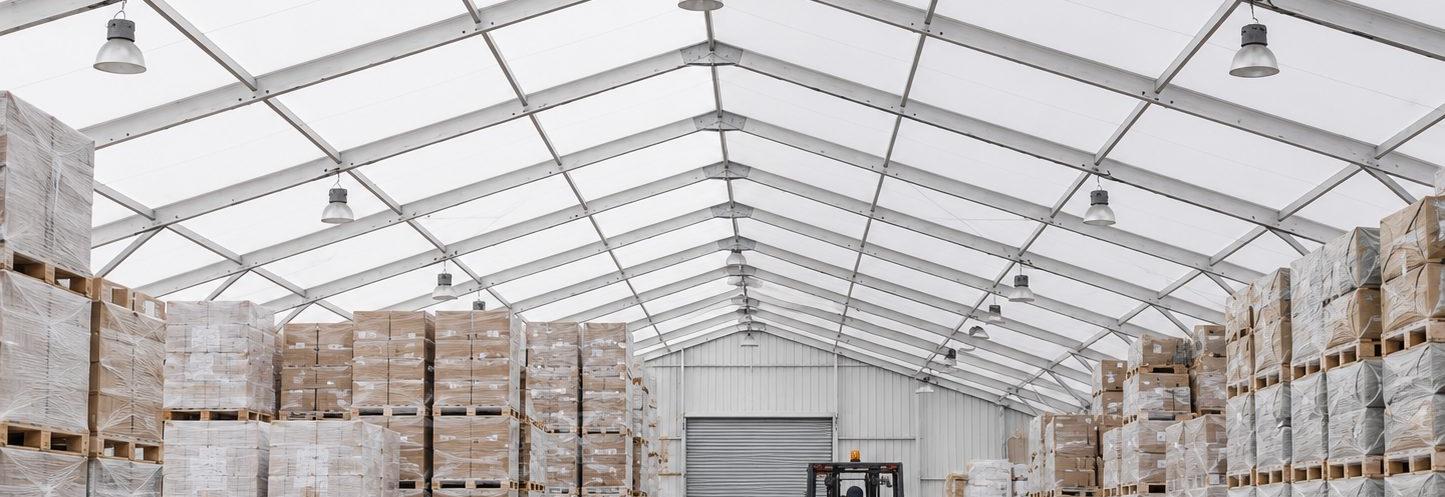
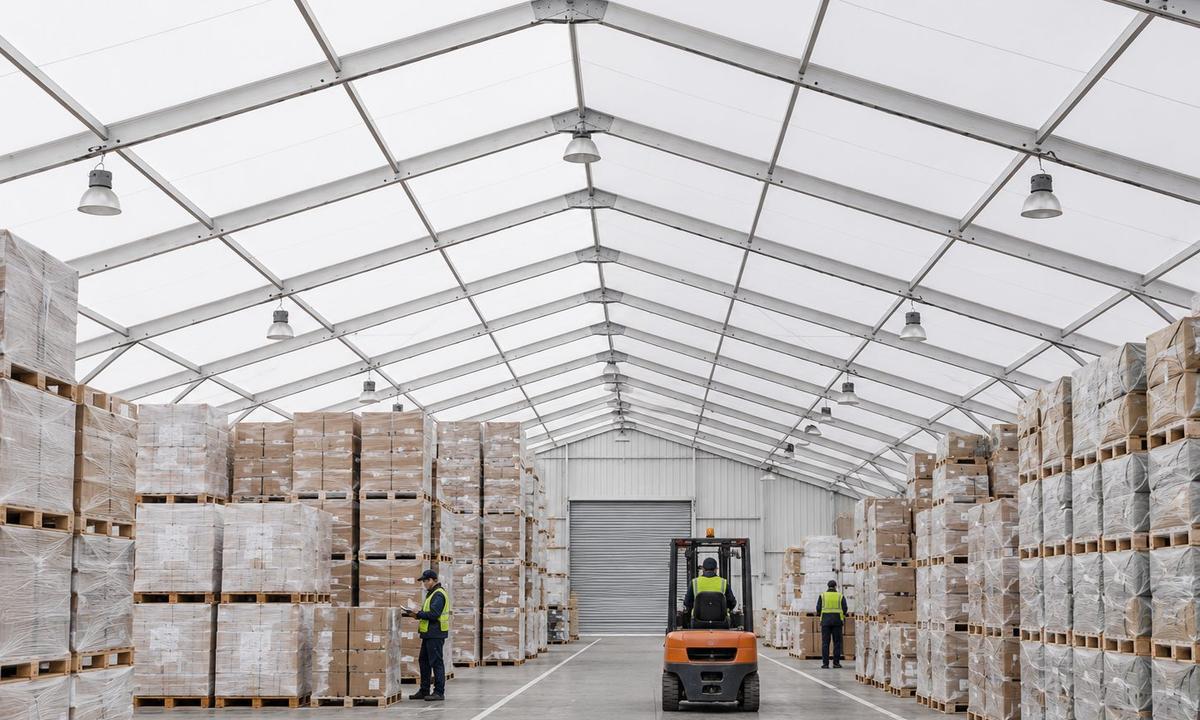
Seasonal inventory storage tents feature a modular aluminum alloy structure. Components are prefabricated in a factory and can be easily assembled on-site, allowing for the completion of a 1,000-square-meter storage space in just a few days—enabling businesses to capitalize on critical stocking windows. The interior is free of large support columns, providing a spacious, wide-span environment that accommodates forklift operations, shelving layouts, and cargo stacking without obstruction. This ensures efficient workflows for the movement and storage of goods, making it ideal for items such as gift sets, fast-moving consumer goods (FMCG), and seasonal merchandise. Businesses can choose between purchasing or leasing these structures; they can be set up for use during peak seasons and dismantled or stored during off-peak periods. Furthermore, they can be relocated to other sites for reuse, with storage capacity flexibly adjusted to match inventory volume.
Fully equipped to meet the safety requirements for retail inventory storage
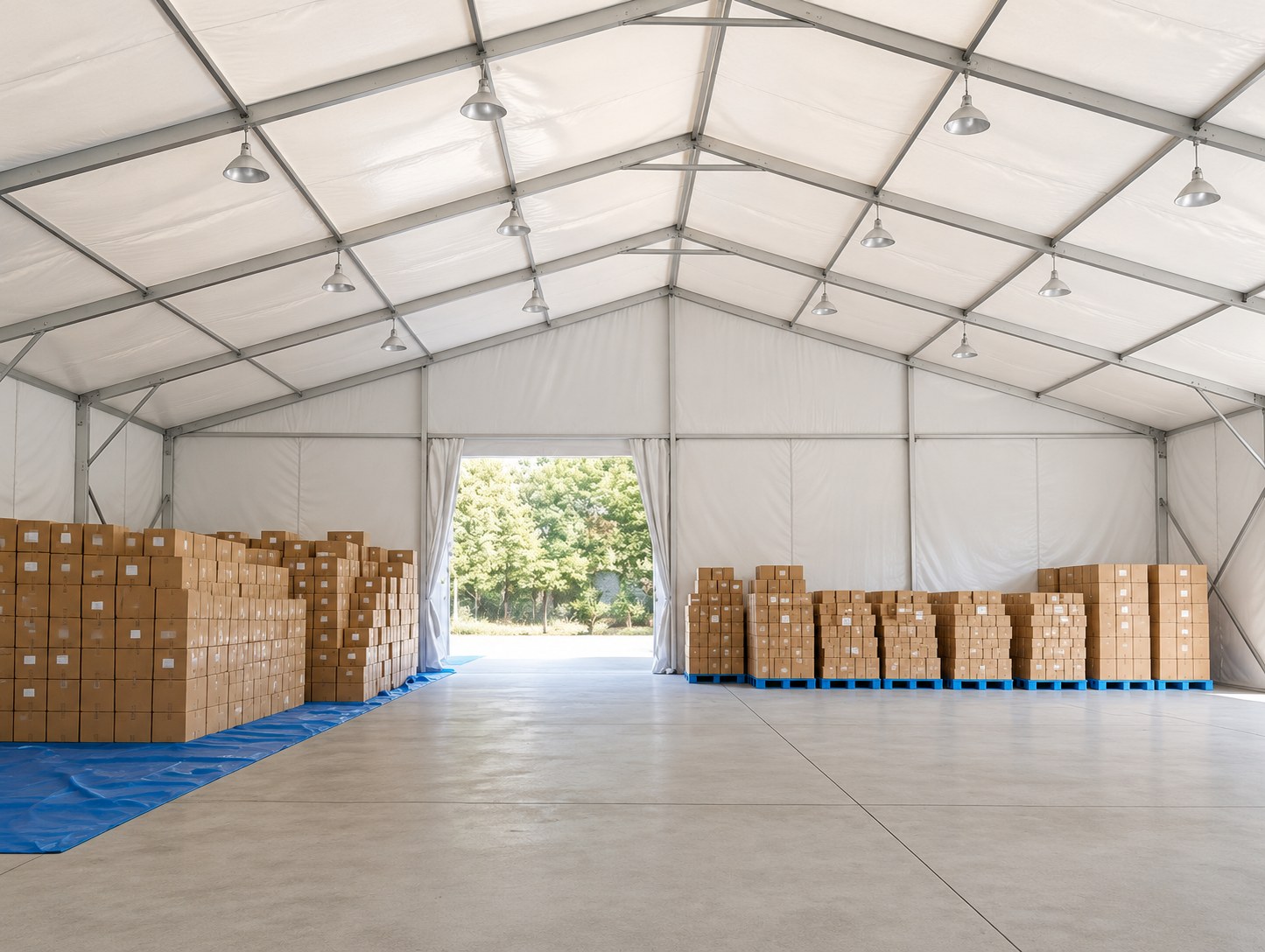
These tent structures are far more than simple sheds; they can be customized with features such as flame-retardant PVC fabric, translucent roof panels for natural lighting, ventilation systems, roll-up doors for loading and unloading, interior lighting, and perimeter security fencing. Designed to be rainproof, moisture-resistant, and wind-resistant, they meet the fundamental safety requirements for temporary storage, ensuring that stocked goods remain secure.
For the retail, e-commerce, and supermarket sectors, flexible storage solutions have become a key strategy for reducing costs and increasing efficiency. By breaking free from the rigid constraints of traditional warehouses, these modular tents allow for on-demand capacity expansion and can be dismantled once no longer needed—helping businesses avoid the pitfalls of heavy asset investment while enabling them to handle seasonal inventory surges with ease.