
11 November 2026 · Tent Ideas · WT tent
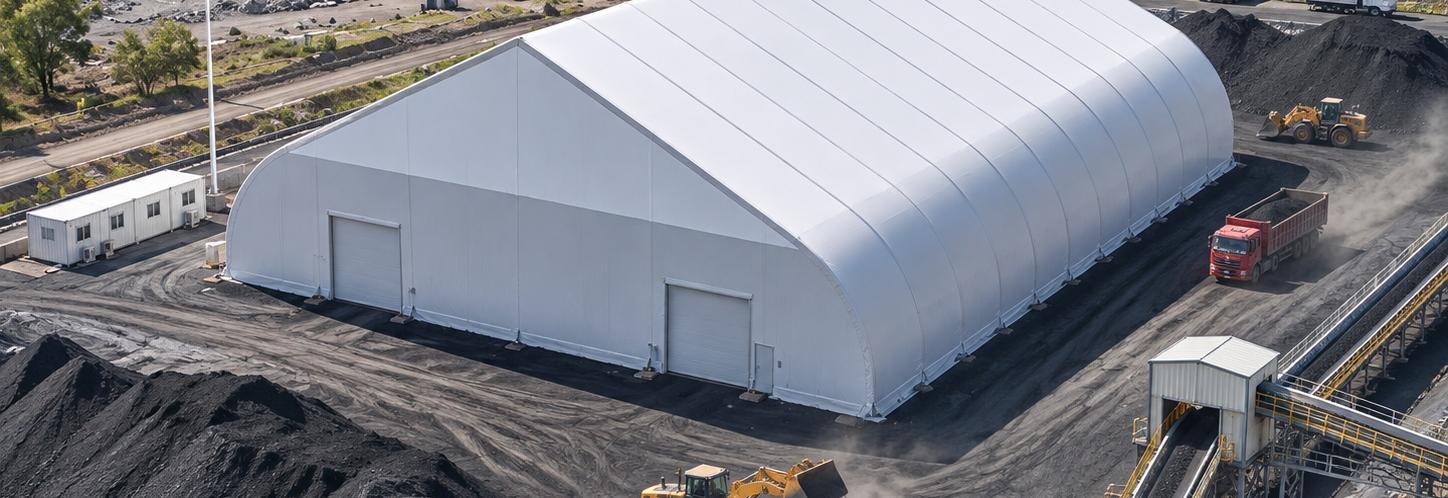
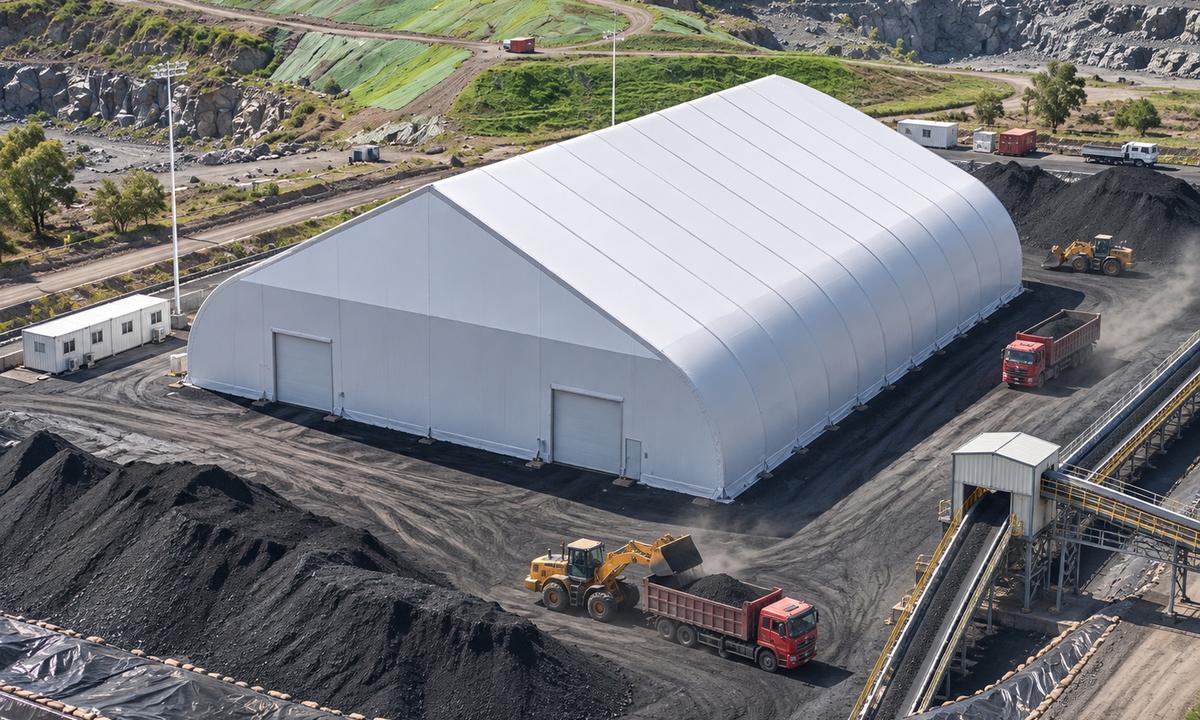
Prefabricated storage tents are an ideal choice for enclosed coal storage facilities; they offer rapid assembly and controllable costs, while easily meeting strict environmental requirements for full containment. However, such enclosed spaces are prone to heat accumulation—leading to stifling conditions during the summer—as well as risks such as dust leakage, gas buildup, and the spontaneous combustion of coal piles. Consequently, a well-engineered ventilation design is essential to ensure a safe working environment and successful regulatory inspection.
Core principle: Bottom-in, top-out airflow; dust control and explosion prevention via slight negative pressure.
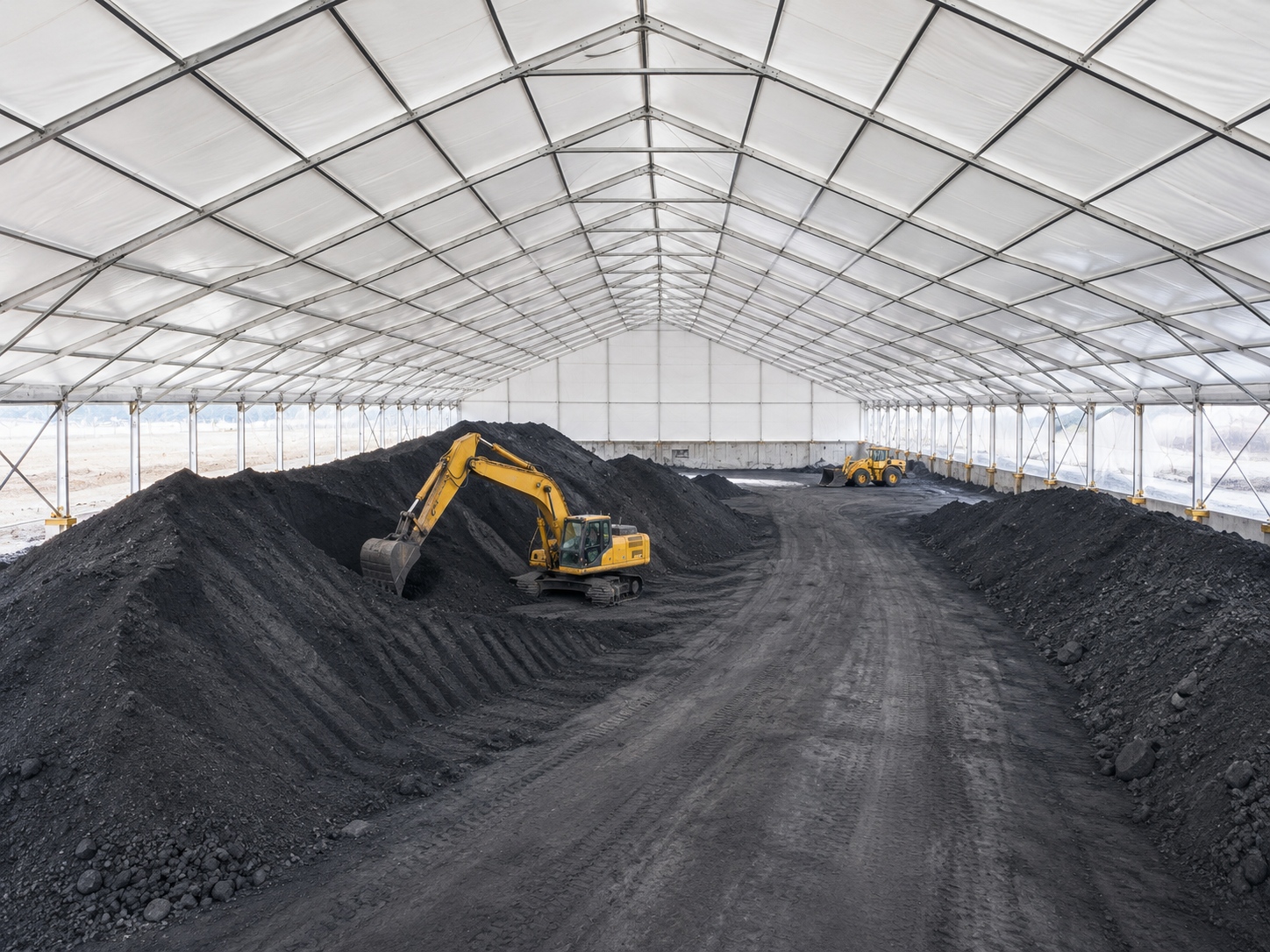
Ventilation for coal storage tent structures cannot simply replicate the designs used for conventional industrial buildings; it must strictly adhere to essential environmental and safety standards. A "bottom-in, top-out" chimney-effect airflow pattern should be employed, relying primarily on natural ventilation supplemented by mechanical negative-pressure systems. Fresh air enters through low-level, dust-proof ventilation strips located along the side walls and gables, sweeping across the coal piles and operational zones to carry away heat, dust, and gases. As the air warms and rises, it is exhausted through ventilation units at the roof ridge, effectively eliminating high-temperature "dead zones" near the top. Throughout the process, a slight negative pressure is maintained within the structure, preventing dust from escaping at the source.
Tiered options, adapted to various site conditions
For sites with sufficient wind exposure and limited budgets, prioritize purely natural ventilation. Install rainproof and dustproof roof monitors (ridge vents) along the roof ridge, incorporate dust-blocking ventilation strips on the side walls, and equip entrances and exits with industrial air curtains to prevent dust from escaping when vehicles enter or leave. In areas characterized by low wind speeds and high temperatures, a hybrid natural and mechanical negative-pressure ventilation system is recommended; this involves installing explosion-proof negative-pressure exhaust fans—designed solely for air extraction—along the roof ridge or on the gable walls. This setup should ensure a minimum air exchange rate of 15 times per hour during the summer, with all fans meeting dust-explosion-proof standards. For large-span tent structures, where "dead zones" in airflow may occur, explosion-proof circulation fans can be added; these should be integrated with temperature, gas, and dust sensors to enable intelligent, automated start-stop operation. Furthermore, prioritize the use of light-blocking, heat-insulating membrane materials to minimize heat accumulation from solar radiation. Additionally, apply an anti-condensation coating to the interior surface to prevent moisture from condensing and dripping onto the stored coal, thereby reducing the risk of spontaneous combustion.
Avoiding Common Pitfalls in Ventilation Design
Many projects fall into common traps: installing standard louvers combined with positive-pressure ventilation, which causes dust to escape; using unsuitable fans, creating explosion risks; or relying solely on roof-mounted exhaust without bottom-level air inlets, leading to airflow short-circuiting and persistent, stifling heat in the workspace. An effective ventilation strategy must not only alleviate heat in the working environment but also align with environmental and safety regulations, ensuring that enclosed coal storage tents are both compliant and functional.