
30 October 2026 · Tent Ideas · WT tent
As the demand for public fitness continues to grow, the scarcity of land quotas and the difficulty in securing designated sports land have become significant hurdles. Traditional steel-structure or concrete sports facilities often face lengthy approval processes and slow implementation, leaving many reserve land plots, leftover spaces beneath elevated structures, and vacant areas on school campuses underutilized. Prefabricated sports tents—classified as lightweight, temporary structures—leverage regulations for temporary land use, offering an ideal solution to overcome land-related bottlenecks and rapidly expand available space for physical activity.
Does not consume permanent land-use quotas; revitalizes idle land plots.
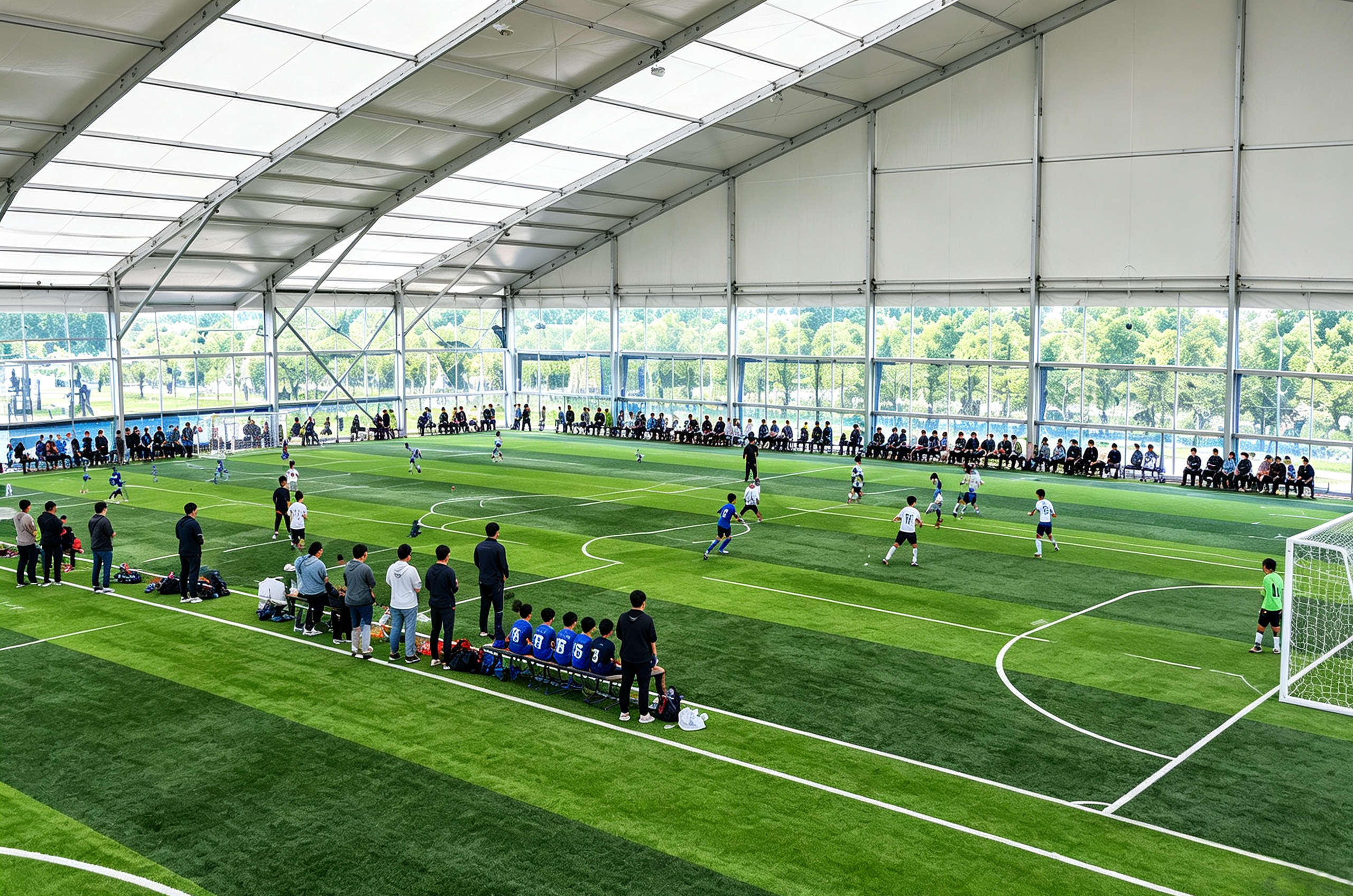
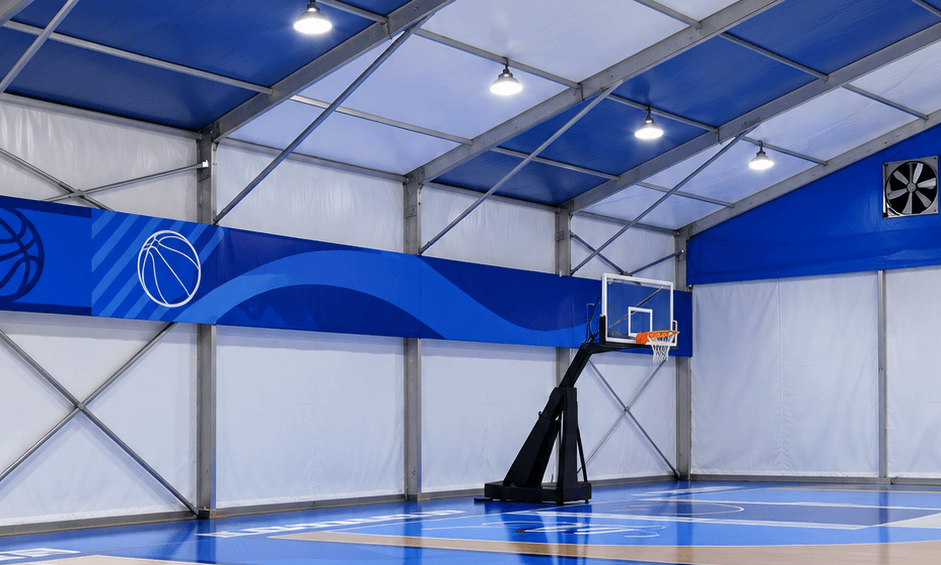
Sports tents do not alter the original nature of the land, nor do they consume construction land quotas. They can be dismantled after use, restoring the site to its original state—a process that complies with regulations for temporary land use.Suitable locations include: urban land held in reserve, underutilized spaces such as areas beneath overpasses, vacant land on school campuses, idle space within industrial parks, and sites under short-term lease.By utilizing these tents, areas otherwise unsuitable for permanent structures can be rapidly transformed into sports facilities—such as courts for basketball, badminton, or pickleball—thereby contributing to the creation of "15-minute fitness circles."
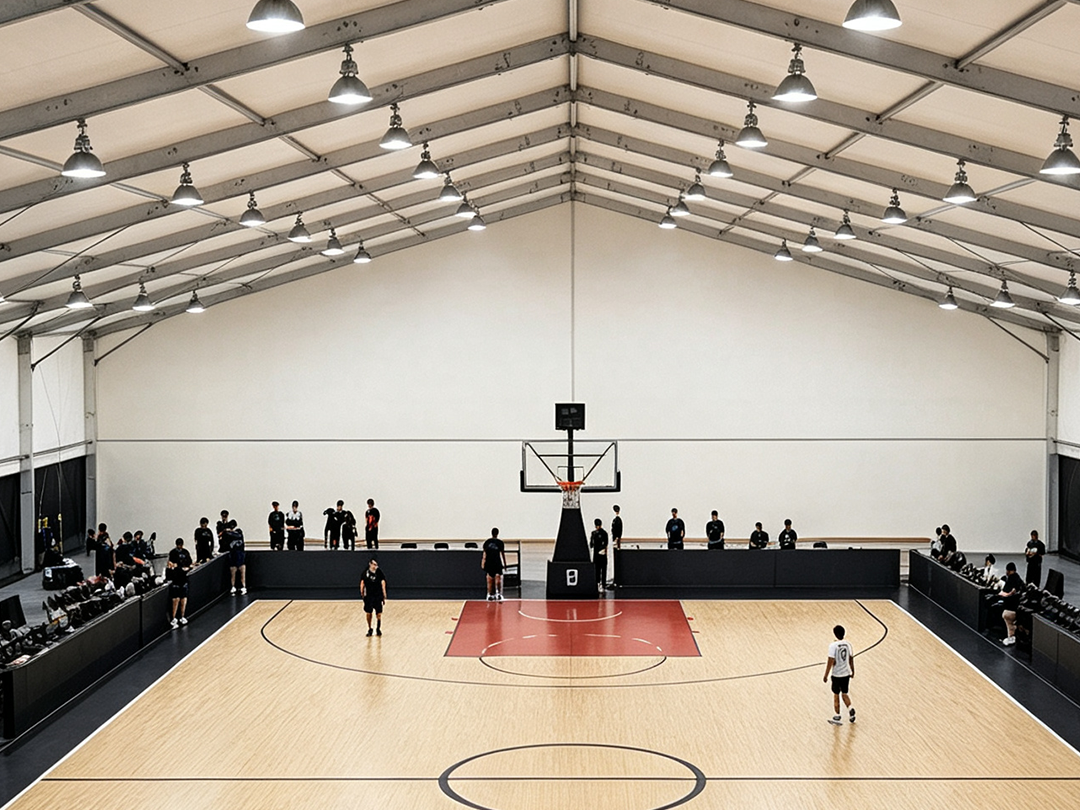
Streamlined approvals lead to faster implementation.
Permanent venues require multi-stage planning and construction permits, a process that often spans six months or longer. In contrast, sports tents are classified as temporary facilities; in most regions, they only require a simple temporary construction filing, bypassing complex procedures such as land requisition or the granting of land-use rights. With components prefabricated in a factory and assembled on-site using a modular approach, a venue spanning over a thousand square meters can be completed in just over a week. This makes them an ideal solution for urgent needs, such as covered school playgrounds, community fitness areas, or temporary event venues. As regulatory requirements vary by location, it is essential to consult with the relevant authorities regarding filing procedures before proceeding, and to ensure the facility is used only within the approved timeframe.
Low investment in civil works; land reclamation is straightforward.
The tent structure utilizes a 6061-T6 aluminum alloy frame. Being lightweight, it typically relies on ballast weights or simple, shallow foundations—eliminating the need for deep excavation and ensuring no damage to the soil layer or underground utility lines. Once the land-use period ends, the structure can be dismantled to restore the site to its original state, a process that is both low-cost and straightforward. Furthermore, the components can be disassembled, transported, and reused at other locations, resulting in higher asset utilization.
Asset-light model to mitigate risks from planning changes
For venue investors, there are uncertainties in planning adjustments, purchase and storage of temporary land, and investment in fixed buildings is risky. Sports tents can be rented or purchased, and can be relocated flexibly: they can be quickly moved when the land plan changes to reduce losses; the scale can also be adjusted according to the off-peak and peak seasons, taking into account the use of multiple business formats such as training, events, team building, etc., lowering the initial investment threshold.
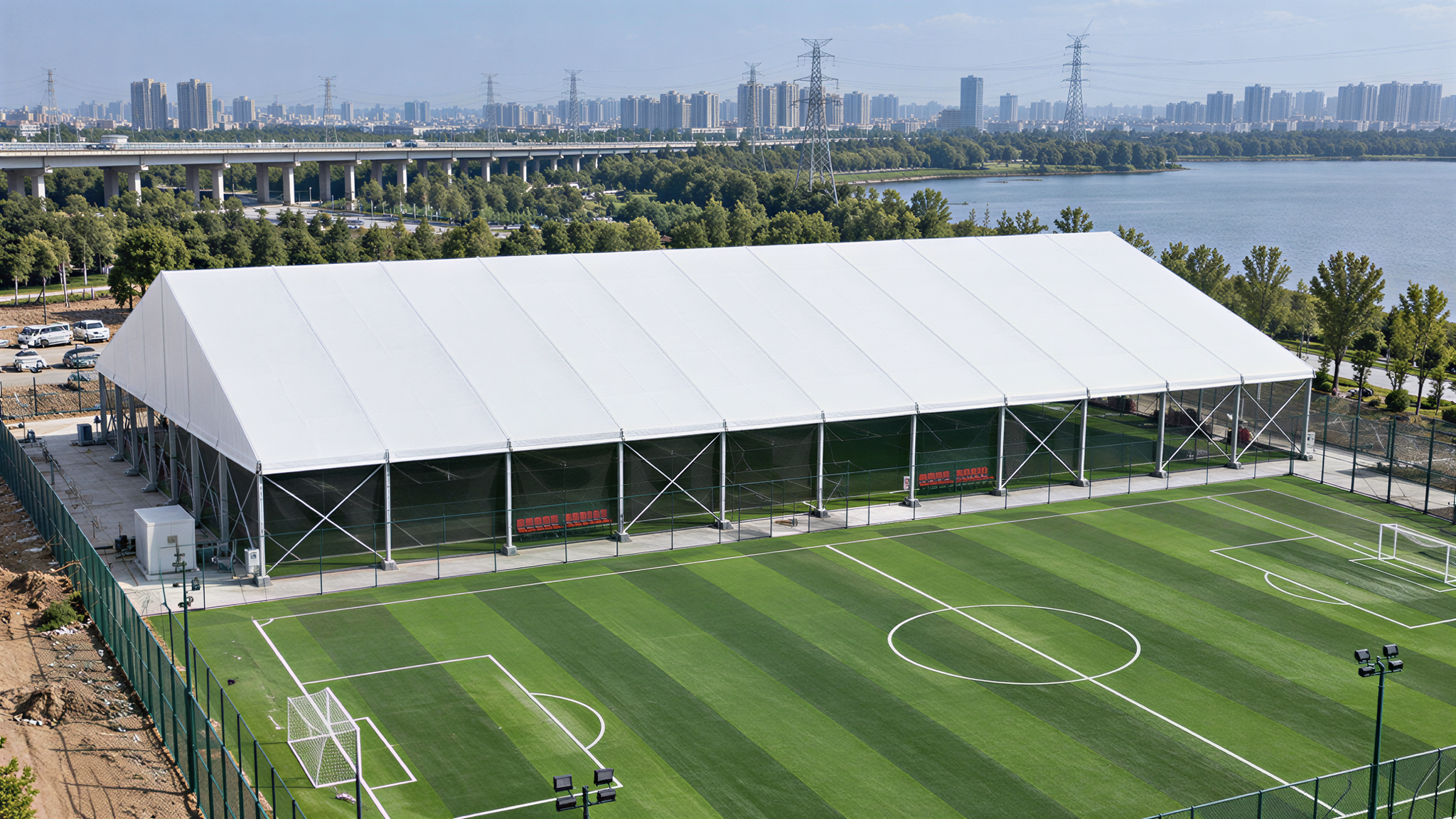
Key Points for Compliance and Avoiding Pitfalls
Using a tent structure is not a "no-strings-attached" solution; several critical factors must be considered. As temporary facilities, these structures have a defined service life and must be dismantled upon expiration—though extensions can be requested in advance if continued use is required. They must be equipped with appropriate fire safety, ventilation, and lighting systems to meet the safety standards for sports venues. Furthermore, the scale and location of the structure must comply with urban planning regulations; not all vacant land is suitable for such installations. It is essential to prioritize reputable manufacturers capable of providing load-bearing capacity calculations and flame-retardancy test reports.
Conclusion
Given the constraints on land quotas, sports tents should not be viewed as replacements for permanent facilities, but rather as flexible, complementary solutions. Offering the advantages of regulatory compliance, rapid deployment, land reversibility, and portability, they enable governments, schools, and operators to revitalize underutilized land and quickly address the shortage of public fitness venues. For those seeking a "light-asset" approach to developing sports spaces, prefabricated sports tents are a compelling option to consider.