
14 September 2026 · Project Insights · WT Tent
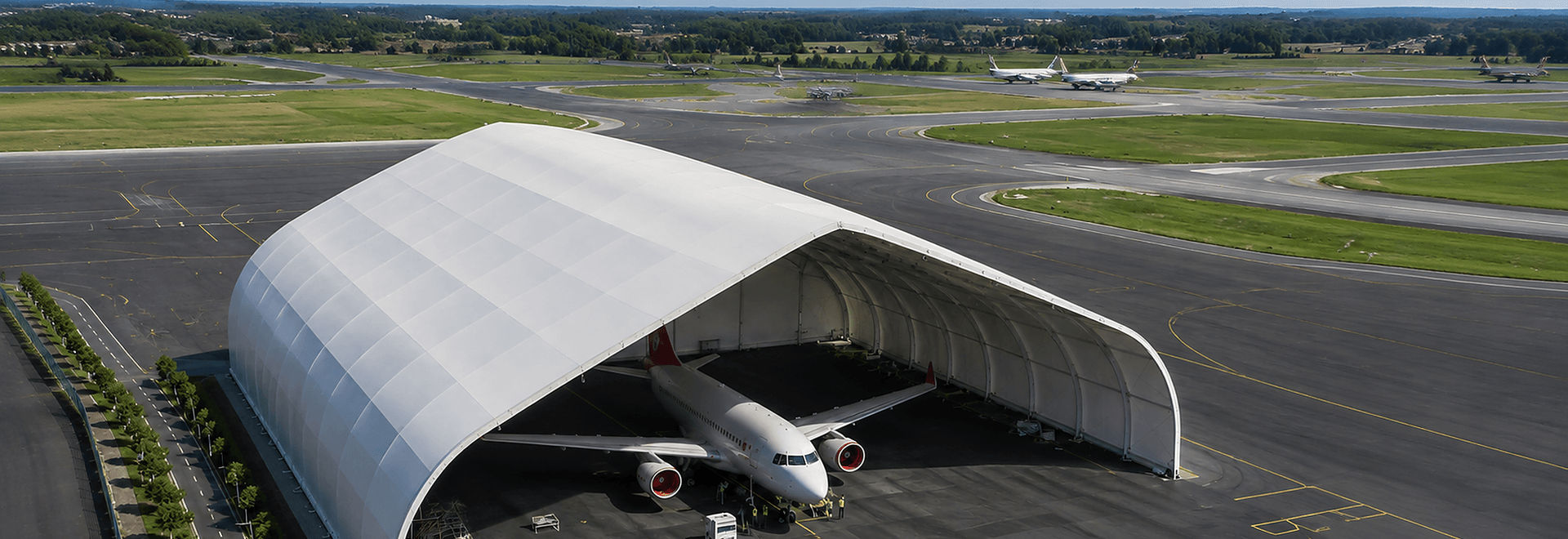
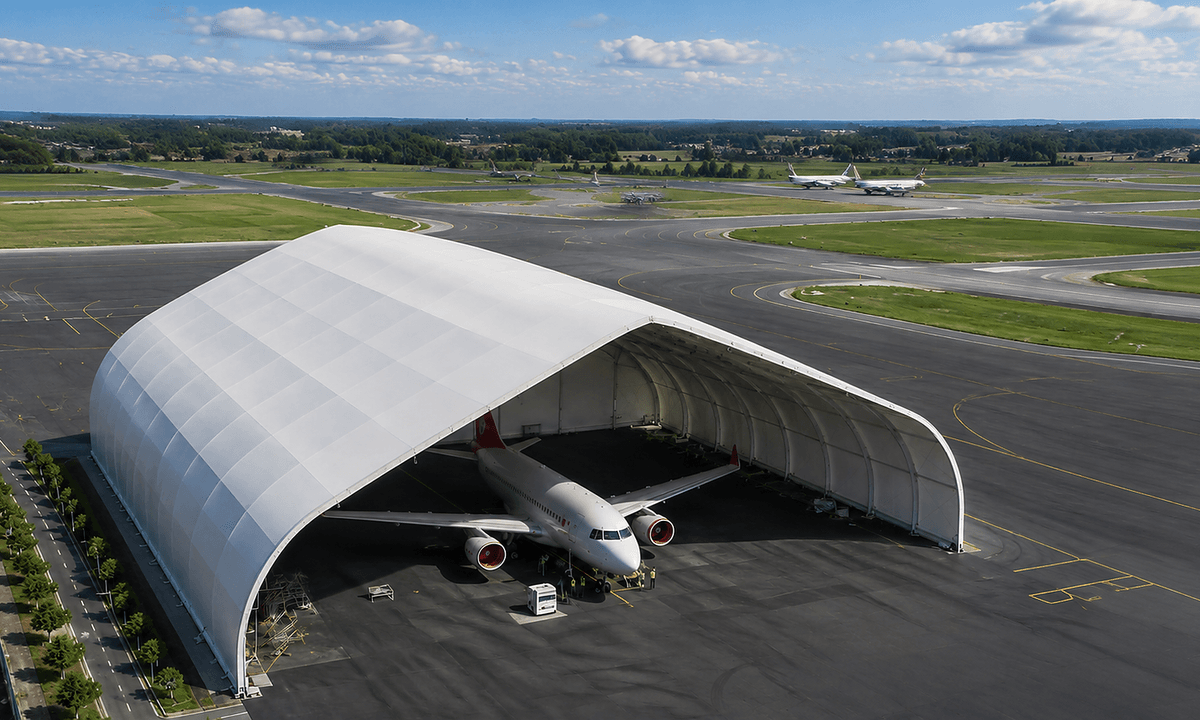
Prefabricated hangar tents are widely used for the parking and maintenance of general aviation aircraft, helicopters, and drones due to their rapid assembly, portability, and lack of need for complex civil engineering. To select a safe, durable hangar tent that fits your site, focus on four key factors: span, wind resistance, membrane material, and foundation.
Span: Match the aircraft model and allow space for operations
The span should not be excessively large, yet it must not be so tight that it merely hugs the aircraft's dimensions. A 10–20m span suits light aircraft; 20–30m is appropriate for medium-sized helicopters; and a span of over 30m is recommended for fixed-wing general aviation aircraft. Additionally, ensure sufficient vertical clearance, adequate hangar door height, and maintenance aisles on both sides to facilitate aircraft movement and routine inspections.
Wind Resistance: Tailor to the location for outdoor safety
Airports are often open and windy; standard temporary tents are strictly unsuitable. Inland sites typically require a wind resistance rating of Beaufort scale 8–10; plains and riverside areas need scale 10–12; and coastal regions prone to typhoons require reinforced structures rated above scale 12, with special attention paid to reinforcing structural joints and hangar doors to eliminate safety hazards.
Membrane Material: Weather resistance and flame retardancy determine service life
The membrane serves as the tent's primary enclosure. For standard aviation applications, a thickened PVC membrane (950g/m² or heavier) is the preferred choice, offering waterproofing, aging resistance, and excellent cost-effectiveness. For high-end, long-term fixed installations, PTFE membranes—offering a lifespan of over 20 years—are suitable; they provide superior flame retardancy and self-cleaning properties, meeting stringent hangar fire safety standards.
Foundation: Adapt to the site and simplify approvals
Prefabricated tents do not require permanent concrete foundations. On paved concrete surfaces, a combination of counterweights and ground anchors allows for flexible assembly and disassembly. Grass or soil sites require ground compaction and pre-embedded anchors. For long-term use, strip foundations can be added to enhance overall stability while avoiding cumbersome civil engineering approval processes. A quick guide to efficient hangar tent selection: determine the span based on the aircraft model, wind resistance based on the climate, membrane material based on the intended service life, and the foundation based on the site conditions. By precisely addressing these four key factors, you can avoid common pitfalls and select a safe, compliant, and highly suitable aviation hangar tent.