
2 November 2026 · Tent Ideas · WT tent
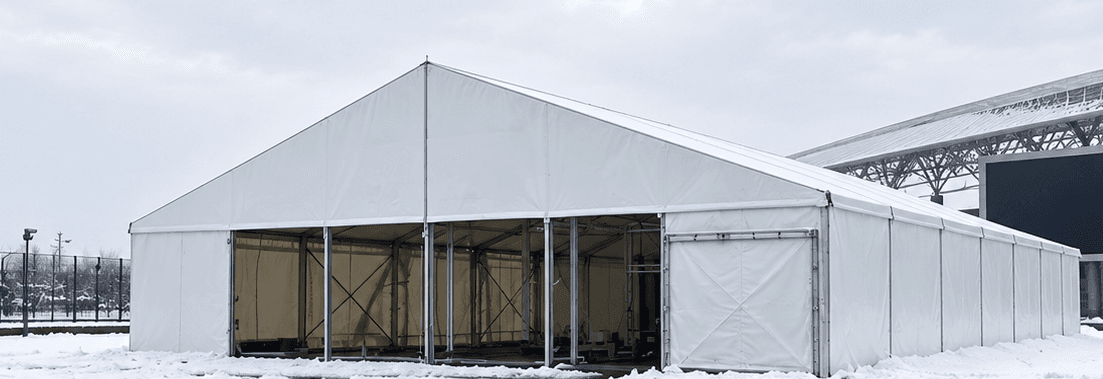
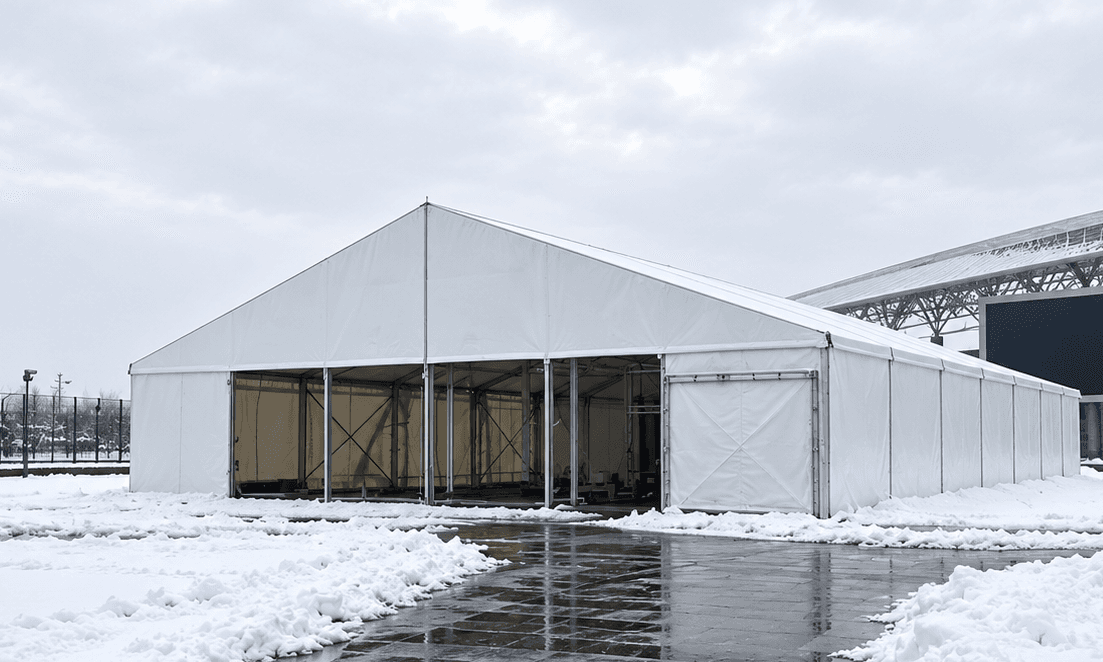
As winter sets in, low temperatures, snowfall, and freezing conditions pose significant challenges for prefabricated storage tents. While these tents serve as flexible and efficient temporary storage solutions, failing to account for snow loads or thermal insulation can easily lead to structural damage from accumulated snow, condensation dripping inside the tent, or frost damage to stored goods. Implementing well-engineered solutions for snow-load resistance and thermal insulation is essential to ensuring the safety and stability of storage operations.
Design at the source: building a solid foundation to withstand snow loads
Ensuring safety against snow begins with proactive planning. A gabled (pitched) roof structure is preferred; in regions prone to heavy snowfall, a roof pitch of 20°–25° should be adopted to allow snow to slide off naturally, thereby avoiding the accumulation issues common with flat or shallow-arched roofs. The framework should be constructed using high-strength 6082-T6 aluminum alloy profiles. In areas with heavy snowfall, purlin spacing should be reduced, and diagonal bracing or tension cables should be added to enhance overall structural stability. Manufacturers must provide a specialized structural calculation report based on local snow load requirements, with particular attention given to areas prone to snow drifting—such as the leeward side of the structure or zones near perimeter walls—to prevent localized overloading. The roof covering should consist of a low-temperature-resistant PVC fabric (with a density of at least 850g/m²) that remains flexible and resists cracking in cold conditions. Additionally, electric heat tracing can be installed within the gutters to prevent meltwater from freezing, which could otherwise cause blockages or lead to the formation of heavy icicles; this approach mitigates safety risks associated with snow and ice at the structural level.
Ensure timely maintenance and standardize snow-clearing operations
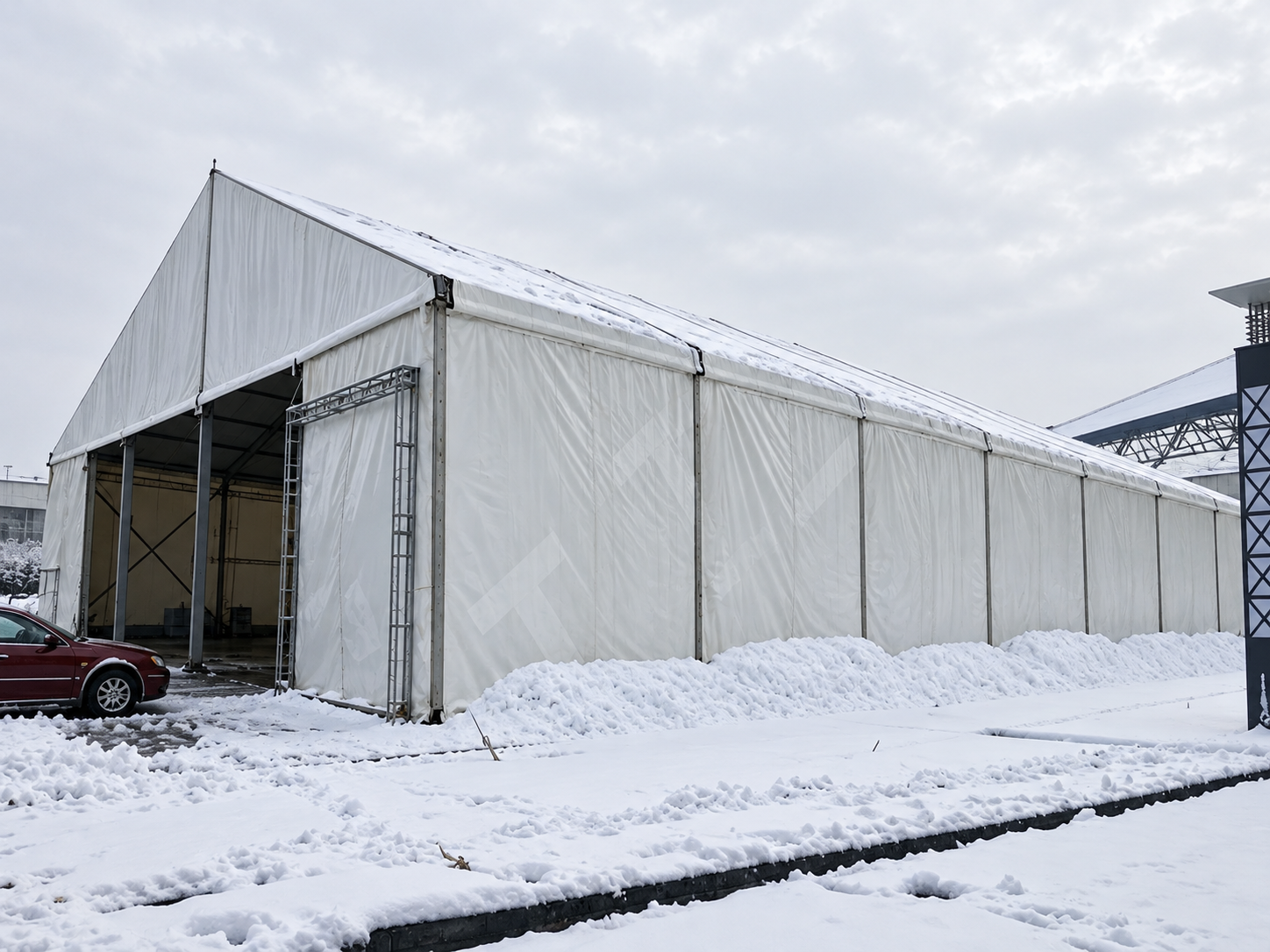
Even the most reliable structures require inspection and maintenance during snowfall. Once accumulated snow becomes compacted and turns to ice, the load on the structure increases exponentially—a primary cause of tent collapses. Organizations should establish a snow-inspection protocol, mandating immediate snow removal whenever snow accumulation reaches a predetermined thickness threshold. When clearing snow, prioritize the use of long-handled, soft-edged pushers, working symmetrically from both sides toward the roof ridge. The use of sharp shovels—which could puncture the tent fabric—is strictly prohibited, as is allowing multiple people to congregate and step on a single spot, which can cause uneven stress distribution. Minimize the use of salt-based de-icing agents to prevent corrosion of the aluminum alloy frame and the tent fabric coating. In the event of an extreme blizzard warning, promptly relocate valuable assets and implement evacuation plans for all personnel.
Thermal insulation on demand, balancing temperature control with condensation prevention
Thermal insulation strategies should be tailored to the specific characteristics of the stored goods, with a primary focus on addressing the issue of condensation and dripping. For general, freeze-resistant items, one can install aluminum foil insulation liners or insulation cotton interlayers, and add windproof curtains at doorways to minimize the influx of cold air; additionally, controllable vents should be incorporated to allow for periodic moisture discharge.For goods sensitive to freezing, it is recommended to replace the side-wall panels with B1-rated fire-retardant rock wool sandwich panels. Furthermore, "thermal breaks" should be applied to beams and columns to prevent the formation of cold spots on metal surfaces, which can lead to frost accumulation. Installing an airlock (buffer vestibule) at entrances and exits will help limit the exchange of hot and cold air, thereby reducing the energy required for heating. Crucially, one must avoid simply sealing the space and applying heat without ventilation; doing so will cause water vapor to condense and drip continuously, leading to moisture damage to the stored goods.
Safety First, Long-term Management
Prefabricated warehouse tents are lightweight, temporary structures and must not be used in the same manner as permanent industrial facilities. Winter operations should follow a strategy centered on "design-based foundations, proactive inspections, and appropriate thermal insulation," while balancing the requirements for snow-load resistance, heat retention, and ventilation. By employing suitable structural reinforcements, adhering to standardized snow-clearing procedures, and implementing effective thermal insulation, operators can confidently manage cold, snowy weather—thereby safeguarding warehouse operations and ensuring the smooth turnover of goods.