
5 November 2026 · Tent Ideas · WT tent
Many manufacturing, e-commerce, and logistics companies face a common challenge: during peak seasons, order volumes surge, leaving them short on warehouse space; conversely, during off-peak periods, inventory levels drop, resulting in large areas of idle warehouse space—yet the rent must still be paid. Traditional, fixed-location warehouses often come with long lease terms and rising rental costs, and they are difficult to modify or relocate, making it hard to adapt to fluctuating inventory volumes. In this context, flexible warehouse tents have emerged as a highly cost-effective storage solution.
Scale capacity on demand to accommodate inventory fluctuations during off-peak and peak seasons
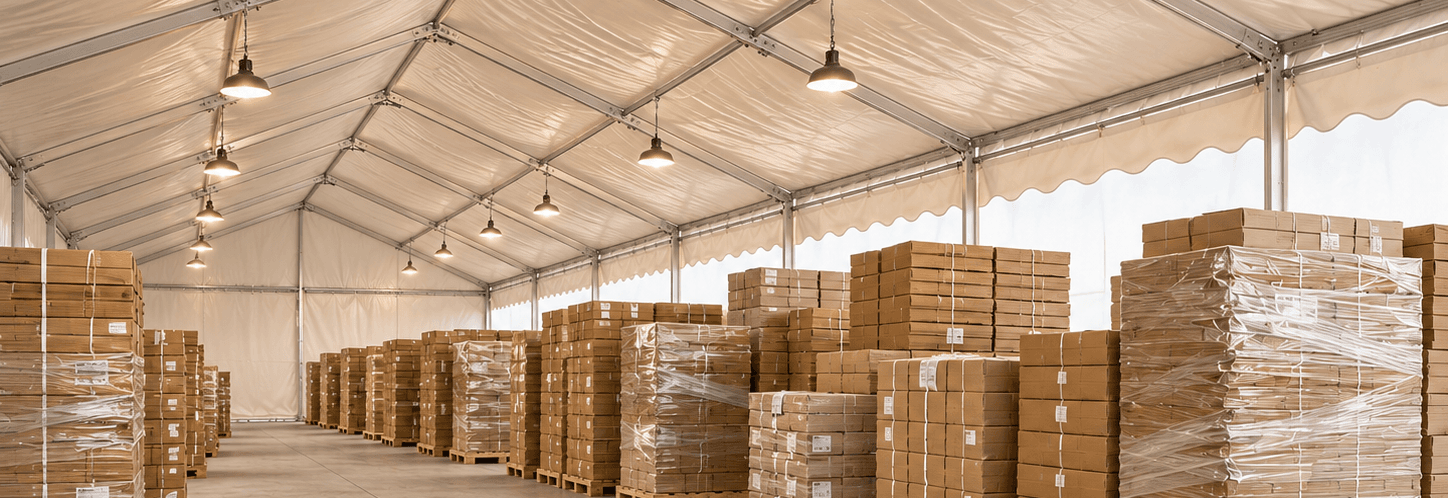
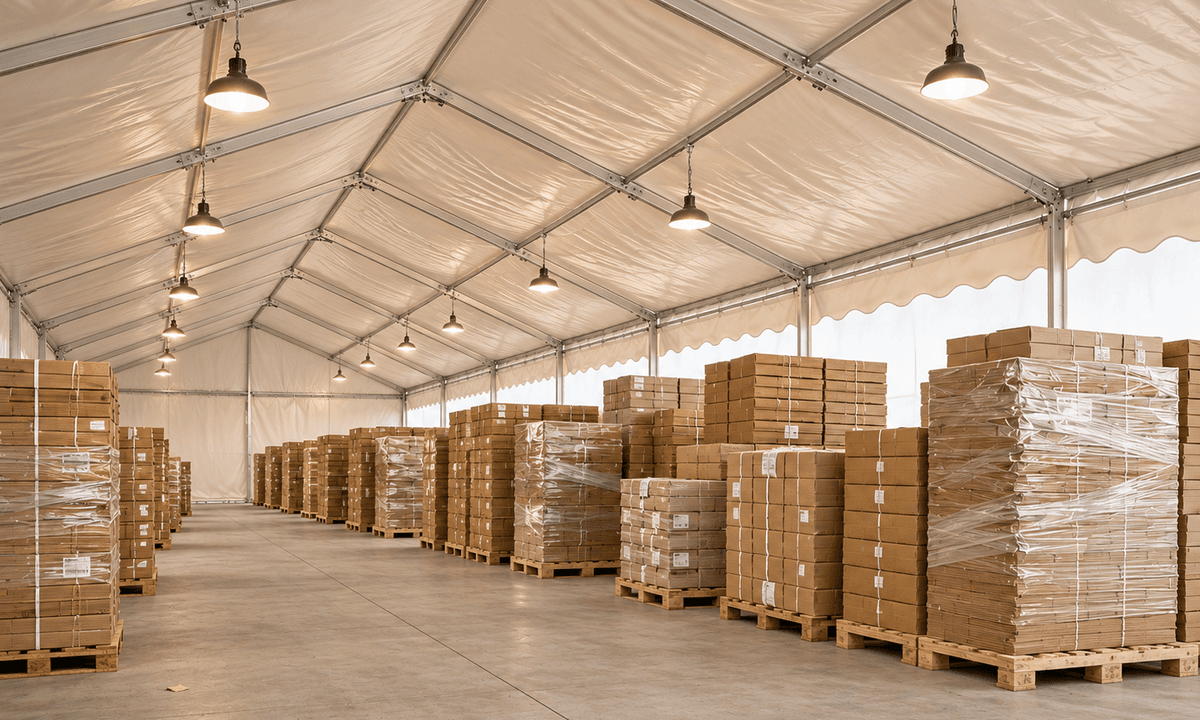
Prefabricated storage tents feature a modular design, allowing for flexible, adjustable floor space. During peak seasons, they can be rapidly assembled to expand storage capacity; conversely, during off-peak periods when inventory levels drop, they can be dismantled to reduce the footprint—ensuring you never pay for unused space. These structures can be installed on open land or vacant areas within factory premises, free from the constraints of existing warehouse layouts. This truly enables you to set up only the space you need, scaling your storage capacity dynamically in line with your current inventory levels.
Short setup period, rapid time-to-production
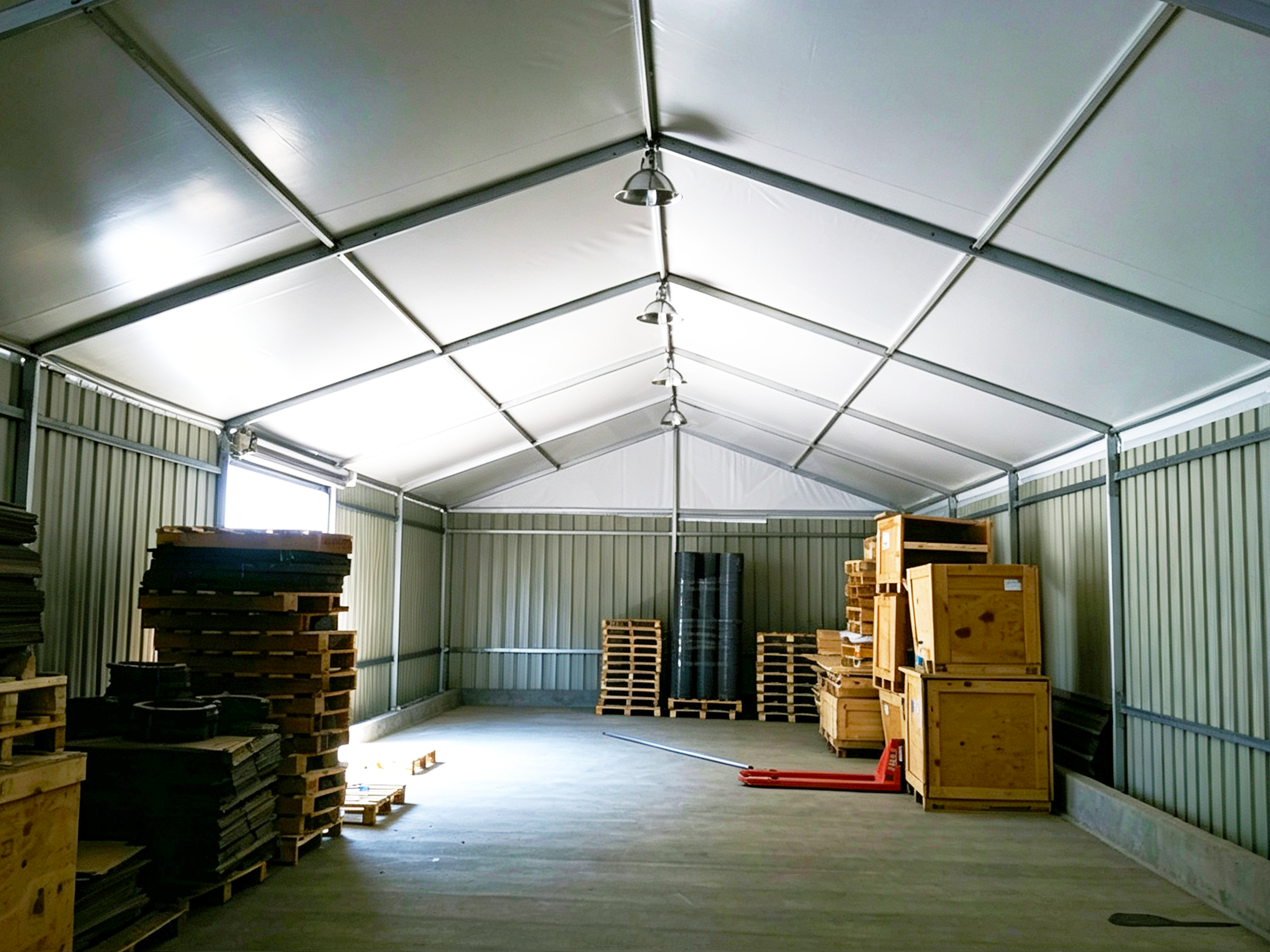
Compared to the lengthy approval and construction timelines required for permanent warehouse structures, aluminum-alloy storage tents can be assembled on-site and put into use within just a few days. They offer rapid delivery to address urgent capacity expansion needs—such as those arising from major e-commerce promotional events or sudden spikes in order volume—providing an immediate solution when facilities become overwhelmed during peak seasons. Furthermore, the main structure of these tents can be dismantled and relocated; once a project concludes or site requirements change, they can be taken down and reused elsewhere, ensuring that your assets remain flexible rather than being tied to a single, fixed location.
Controllable costs, free from the constraints of long-term leases
Traditional warehouses typically require long-term leases of 1–3 years, with high overall costs covering rent, property management, and facility modifications. In contrast, warehouse tents offer flexible short-term or seasonal rental options, requiring lower investment and involving simpler approval processes. Their large-span, column-free interiors facilitate the movement of forklifts and the stacking of goods. Furthermore, these structures can be equipped with rain protection, thermal insulation, ventilation, lighting, and fire safety systems, making them suitable for a wide range of storage needs—from raw materials and finished products to goods in transit.
Suitable for a wide range of scenarios, balancing safety and practicality.
Whether for temporary storage during major e-commerce sales events, short-term holding of factory raw materials, logistics transshipment, or the enclosed storage of materials at mining sites, flexible storage tents offer an ideal solution. Featuring robust frameworks and flame-retardant, wind-resistant covers, these structures combine safety with practicality, making them the preferred choice for fluctuating storage needs.
In an environment where inventory levels frequently fluctuate, businesses are no longer strictly dependent on permanent, conventional warehouses. Flexible storage tents provide a versatile, cost-effective, and rapidly deployable solution, helping companies reduce storage costs and enhance supply chain turnover efficiency.